Moonbeam Astronomy Club
Explore the night sky together.
Calm, practical observation notes and constellation guidance from a welcoming community of amateur stargazers.
- Community-led observation
- Clear constellation learning
- Beginner-friendly meetups
Sky highlights
✦-
Observation Logs
Recent notes share sky conditions, targets, and practical telescope takeaways.
-
Constellation Learning
Seasonal guides turn star patterns into clear, beginner-friendly skyfinding steps.
-
Meetup Updates
Announcements keep members aligned on dates, weather calls, and viewing plans.
Club resources
Browse the core resources members use to learn the sky, review field notes, and stay current with community updates.
Constellation guides
Seasonal charts that help beginners find key constellations step by step.Beginner skywatching tips
Practical advice on timing, visibility, and simple gear for confident first sessions.Community announcements
Meetup dates, weather-related changes, and club notices collected in one place.Observation notes
Recent skywatching logs from the club field notebook
Brief, practical notes from recent sessions so members and newcomers can quickly scan what was visible and how conditions changed.
Jupiter belts sharp after 21:30 clearing
Thin haze lifted enough for steady views at 120×. Two main cloud bands held detail for about 18 minutes, with the Galilean moons well spaced to the east.
Andromeda core visible before moonrise
Naked-eye spotting was faint but reliable from the north edge of the park; binocular framing improved contrast.
Orion rise check from east-facing viewpoint
First stars emerged through low cloud breaks near 05:10. Horizon humidity was high, but belt alignment remained clear.
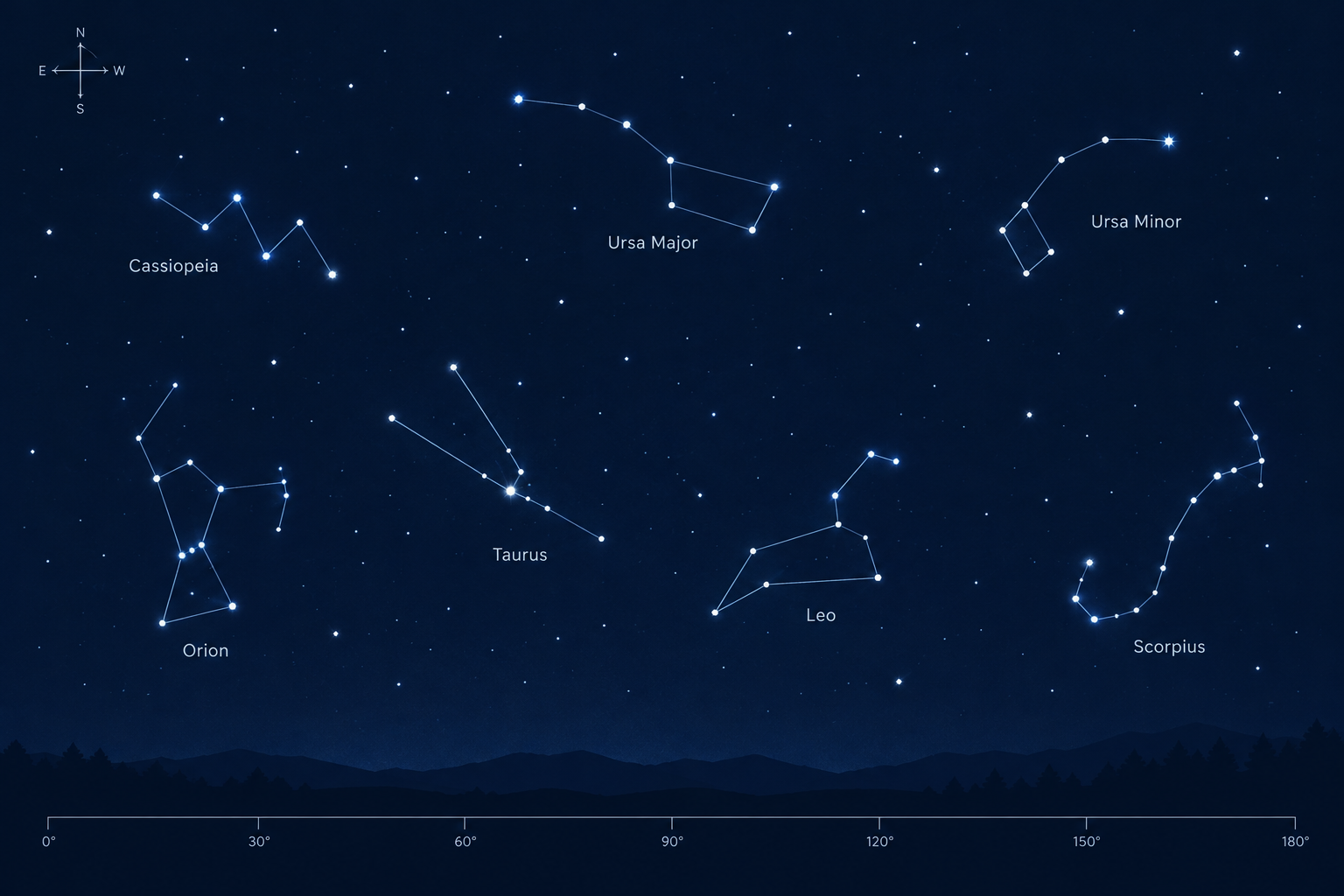
Constellation guides
Learn the night sky with clear reference points.
-
Recognizable constellations
Start here✓ Orion belt first · ✓ Big Dipper pointer stars · ✓ Cassiopeia “W” shape
-
Seasonal viewing windows
Plan nights✓ Winter: Orion high after dusk · ✓ Spring: Leo rises earlier · ✓ Autumn: Pegasus overhead
-
Simple observation tips
Quick checks✓ Let eyes adapt for 15 minutes · ✓ Use a dim red light · ✓ Trace star hops slowly
Community meetups
Upcoming skywatch gatherings
Short, practical sessions for beginners and returning members. Bring your curiosity, and we will guide the night together.
Tue, Nov 12 • 7:15 PM
•
Riverside field deck
Jupiter and moon transit watch
Skywatching focus: tracking Jupiter’s cloud bands and timing visible moon crossings.
New members are warmly welcome—bring binoculars if you have them, and we will share telescopes on site.
Sat, Nov 16 • 6:45 PM
•
Hilltop overlook
Autumn constellation pathfinder
Skywatching focus: locating Pegasus, Andromeda, and the Great Square as orientation anchors.
Come for a guided walk-through with star maps; this session is paced for first-time constellation learners.
Wed, Nov 20 • 7:30 PM
•
Community observatory patio
Lunar edge and crater sketch night
Skywatching focus: observing terminator shadows and sketching major crater shapes.
Bring a notebook and join a calm, collaborative session where members compare observations in real time.
FAQ
Practical questions before your first skywatch
Quick answers to help you feel prepared, whether this is your first time under the stars or your fiftieth.
-
Who can join Moonbeam Astronomy Club?
Anyone in our community is welcome—students, families, and independent stargazers. There is no membership fee to attend public observing nights. -
Are beginners welcome at meetups?
Yes. We explain basic sky navigation, telescope etiquette, and what you are seeing in plain language before each session begins. -
What should I bring to a stargazing night?
Bring layered clothing, water, and a red-light flashlight if you have one. Binoculars are useful, but we always share telescopes on-site. -
What happens if weather conditions change?
Safety and visibility guide every decision. If skies are cloudy or conditions are unsafe, we postpone and publish a new observing date. -
How are meetup and schedule updates shared?
We post timing updates in the meetup announcements section and include any location or weather changes there first.